
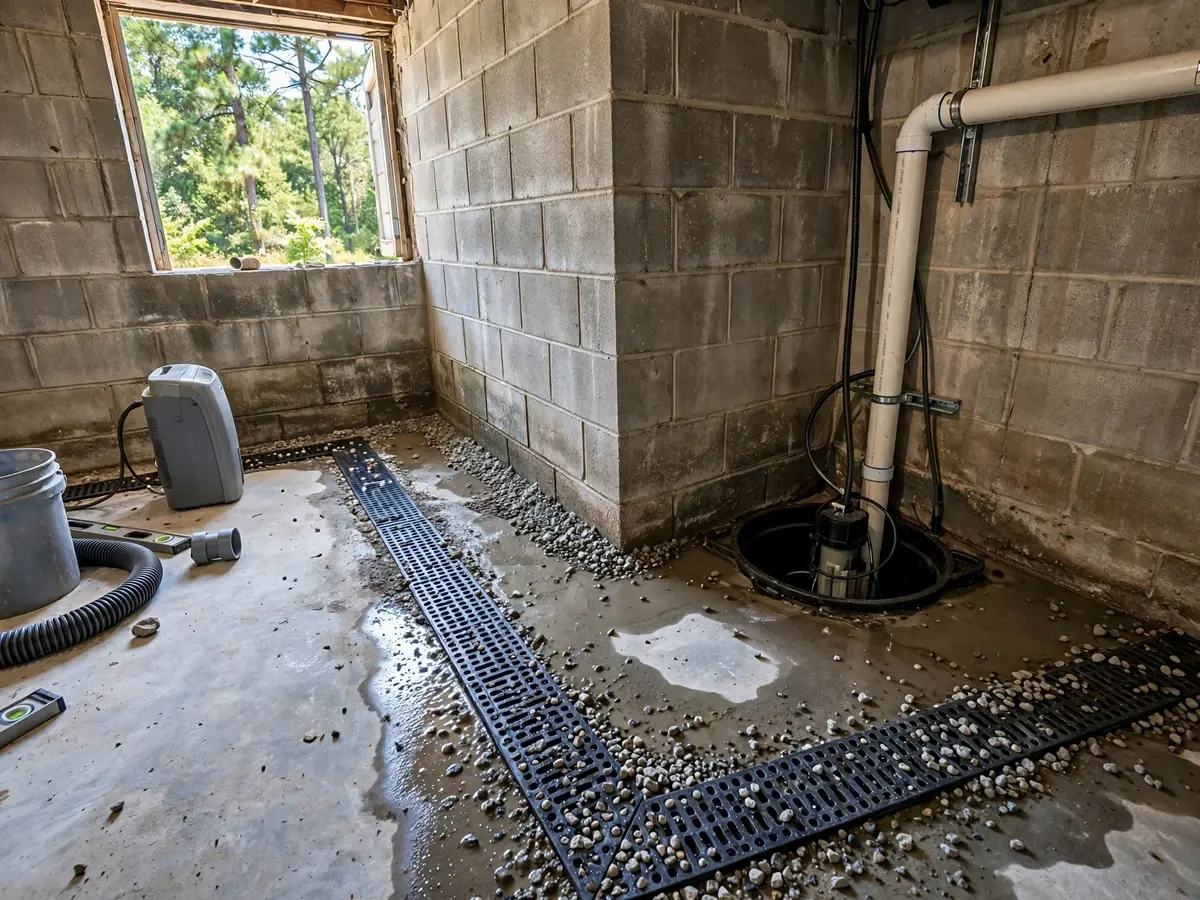
Is it a pipe or the ground?
Check the water heater, the washer hoses and any exposed pipes for drips. Close the main valve for ten minutes and watch the meter. If the meter stops and the water keeps coming, the source is groundwater.
Water that appears after rain along the floor edge or at a wall crack points to groundwater, and water at a pipe or a fixture points to plumbing.
Signs of groundwater
- Dampness at the floor and wall joint after rain.
- White mineral deposits on masonry.
- A musty smell that lingers.
- Water through a floor crack.
- Rust on the bottom of metal items stored on the floor.
Local conditions that raise the risk
Pleasantville's flood information names tidal flooding on its eastern and northern edges and creek flooding in the north. Properties in those areas can see a high water table after storms.
If your house is in one of those areas, expect seepage after heavy rain, and plan on a pump and an interior drain rather than a sealant alone.
| Approach | What it does | Best for |
|---|---|---|
| Interior drain and sump pump | Collects water at the footing and pumps it out | Recurring seepage and a high water table. |
| Crack and joint sealing | Seals an entry point | A single known crack. |
| Downspout and grading fixes | Moves roof and surface water away | Water at one wall after rain. |
| Check valve and backwater valve | Blocks sewer backup | Floor drains that flood during storms. |
Where plumbing fits in
A plumber handles the pump, the drains and the discharge piping, and checks the floor drain for a backwater valve. A floor drain connected to the sewer can also back up in a storm, and a sewer line cleaning visit may be part of the answer.
We pair the interior drain with a sump pump sized for the water it must move. For structural cracks or foundation movement, we recommend an engineer, and we say so plainly.
What we do not do
We do not repair foundation walls or perform structural work. If we see signs of foundation movement, we tell you and suggest you call a structural specialist.
What to do before and after a storm
Before a forecast storm, clear gutters and downspouts, test the sump pump and move belongings off the floor. Know where the main valve and the breaker panel are in case you need to shut things off quickly.
After a storm, check the floor drain, the pump and any damp spots. Photograph what you see, dry the area within a day or two and call us if water returned or the pump struggled.
Water in the basement? Call the 24/7 line and tell us when it appears.
Call (609) 547-1417What affects the price of basement waterproofing
- Length of interior drain needed.
- Pump size and backup.
- Floor and wall finishes that must be opened.
- Discharge route and permits.
- Emergency dispatch for active flooding.
Groundwater seepage is commonly excluded from standard homeowner policies, while flood coverage is separate. Check your policy and ask about flood insurance.
You get a clear price before work starts. For your real number, call {p}.
Standards and sources
- Plumbing work in New Jersey is governed by the Uniform Construction Code plumbing subcode (N.J.A.C. 5:23-3.15), which adopts the National Standard Plumbing Code. Your local construction official issues permits and inspects the work.
- Plumbers are licensed by the New Jersey State Board of Examiners of Master Plumbers. You can check a license with the board before work starts.
- Flood damage is a separate matter from a standard homeowner policy. FEMA's National Flood Insurance Program sells flood coverage, and policies typically carry a waiting period.