What to do during an after-hours plumbing emergency
A leak above a ceiling, a flooded restroom or a backed-up kitchen drain all put revenue and safety at risk. Shut off the water at the main or the fixture, switch off power to wet equipment, and photograph the damage for your insurer.
Tell the dispatcher the building type, how many fixtures are affected and whether you lease or own. That shapes the equipment sent and whether the landlord needs notice.
Common calls from commercial customers
- Restroom leaks and running toilets in shared spaces.
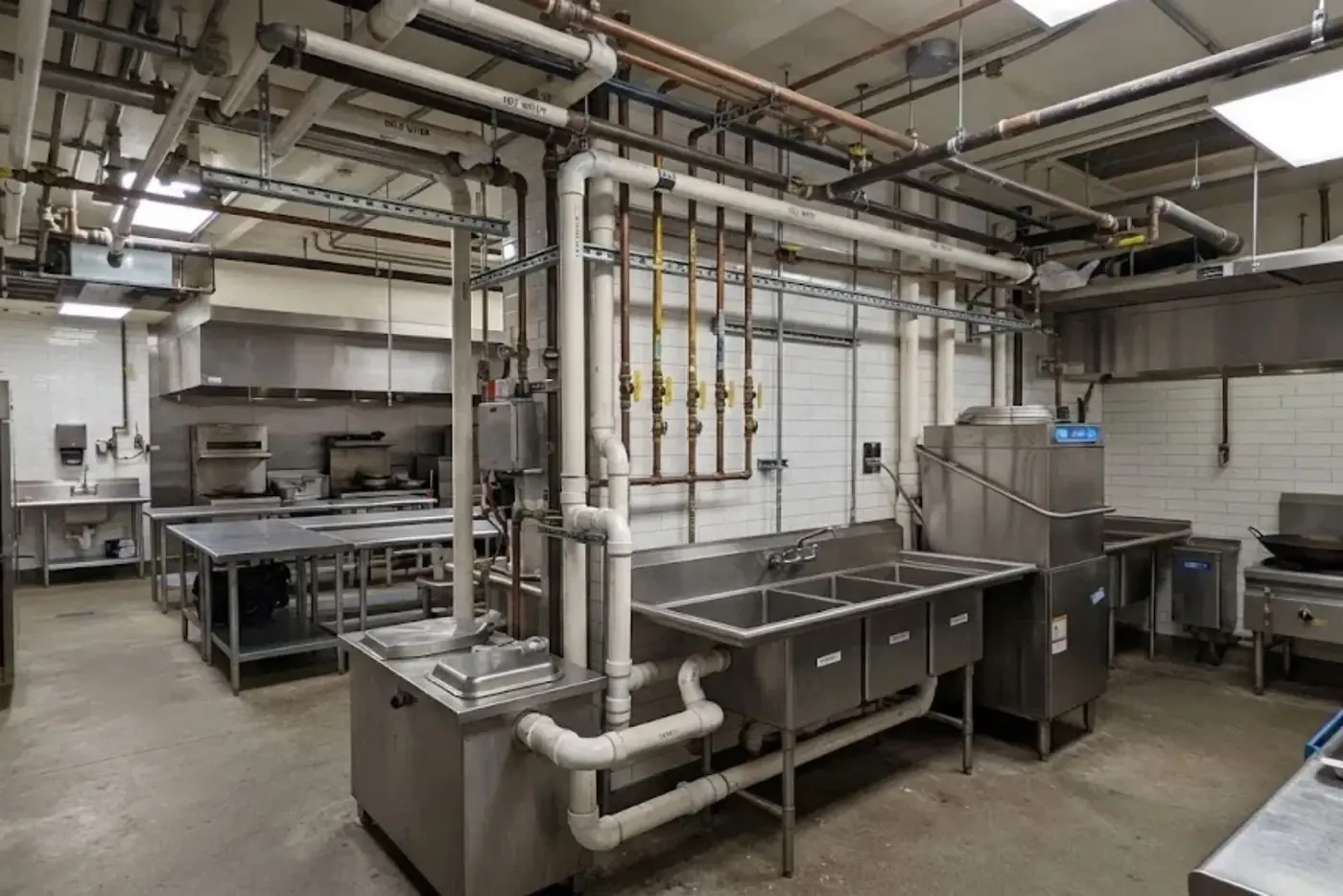
- Kitchen drains and grease buildup in food service.
- Floor drains that overflow after a shift.
- Water heater failures that stop hot water for staff.
- Backflow assemblies that need annual testing.
- Leaks in suspended ceilings over inventory.
Landlords, tenants and property managers
If you manage rentals or lease space, who pays for the plumbing depends on your lease. We bill the party you tell us is responsible, and we document the problem with photos and a written description for your records.
For multifamily buildings, a shared drain line backs up units at once. Our hydro jetting service and routine cleaning visits prevent the repeat calls.
Backflow testing
A backflow preventer protects the public water supply from contamination. Many commercial properties must have these devices tested on a schedule set by the water provider or local code, so ask the water supplier what applies to your building. We can test and repair common assemblies and give you the documentation your provider asks for.
Grease trap and storm drain service
Kitchens that discharge grease need a grease trap or interceptor that is cleaned on a regular schedule. A full trap sends grease into the sewer, which clogs both the building line and the main. We service traps and clean the lines that feed them.
Parking lots and loading areas have storm drains that clog with leaves and silt. A blocked storm drain floods a lot or a loading dock during heavy rain, and cleaning it before storm season costs far less than the cleanup.
| Type of work | Best timing | Why |
|---|---|---|
| Grease trap cleaning | On a recurring schedule | Prevents drain backups during service hours. |
| Backflow testing | Annually, or as your provider requires | Keeps you in compliance. |
| Storm drain cleaning | Before the rainy season | Avoids flooded lots. |
| Leak or backup repair | Immediately | Limits business interruption. |
An honest note on commercial leak detection
Commercial leak searches often involve long runs of pipe, shared walls and several parties. We explain scope and cost on the first call so there are no surprises. See our leak detection page for how we locate leaks in any building.
Businesses on Main Street can also read our Downtown Pleasantville plumbing page.
Business plumbing down? Call the 24/7 line and tell us the building type.
Call (609) 547-1417What affects the price of commercial plumbing
- Building type and the number of affected fixtures.
- Equipment needed, from cables to jetters to camera gear.
- Whether the problem is in your suite or a shared line.
- Parts availability for commercial fixtures.
- After-hours dispatch.
Business insurance policies differ widely on water damage and backup coverage. Ask your agent which events are covered before a claim.
You get a clear price before work starts. For your real number, call {p}.
Standards and sources
- Plumbing work in New Jersey is governed by the Uniform Construction Code plumbing subcode (N.J.A.C. 5:23-3.15), which adopts the National Standard Plumbing Code. Your local construction official issues permits and inspects the work.
- Plumbers are licensed by the New Jersey State Board of Examiners of Master Plumbers. You can check a license with the board before work starts.