
When a leak is an emergency
Active water through a ceiling, a wall that feels warm, or a floor that suddenly turns soft all call for an immediate shutoff. Close the main valve, switch off breakers serving wet rooms, and move electronics away from the area.
A slow leak is different. It shows up as a rising water bill, a meter that moves when every fixture is off, or a damp smell. Those are not emergencies in the same sense, but they cost money every day.
Symptoms that point to a hidden leak
- The water meter keeps turning when every tap is off.
- A water bill that has crept up with no change in use.
- Warm spots on a floor or a hot slab smell.
- Sound of running water in a quiet house.
- Stains, bubbling paint or musty smells on a ceiling or wall.
- Low pressure that appeared suddenly.
Meter still running: what to do first
Turn off every fixture, including the icemaker and irrigation, then watch your meter dial or low-flow indicator. If it moves, water is leaving somewhere. Closing your main shutoff and watching again tells you whether the leak sits inside the house or on the line from the meter.
That single test saves a lot of guessing. A leak that stops when the main closes is on your side of the valve. One that continues may be between the meter and the house, a case we describe on our water service line repair page.
How we find the leak
| Method | What it finds | Best used for |
|---|---|---|
| Pressure testing | Whether a line holds pressure | Isolating one section of supply piping. |
| Acoustic listening | The sound of water escaping | Buried lines and slabs. |
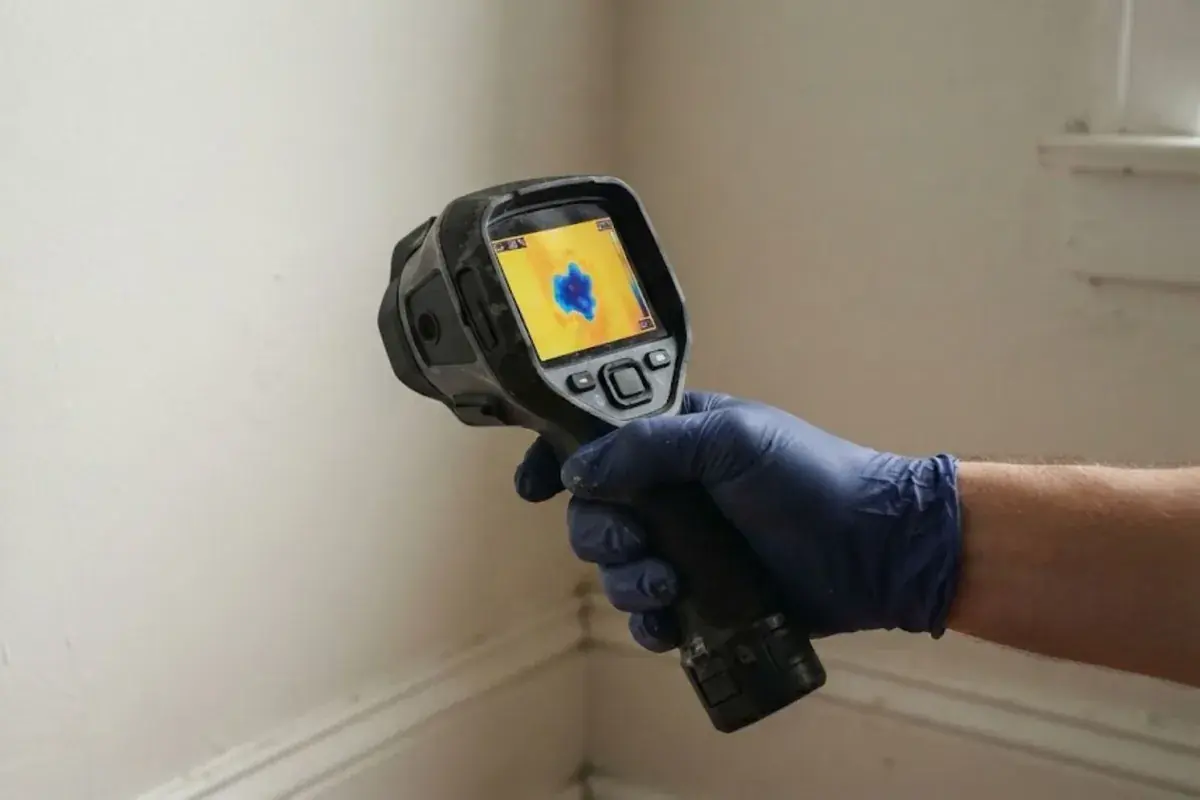
| Thermal imaging | Temperature changes from moving water | Wall, ceiling and floor leaks. |
| Moisture meter | Damp material behind a surface | Confirming how far a leak has spread. |
Slab, crawl space and ceiling leaks
A slab leak means a supply line under a concrete floor is losing water. The usual clues are a warm patch, a running meter and the sound of water with every tap closed. Locating it before breaking the concrete limits the opening to the right spot.
Crawl space leaks tend to show up as damp insulation, mold smell or sagging floors above. Ceiling leaks may come from a supply line, a drain line or a failed fixture upstairs, so we trace the path before cutting drywall.
Irrigation systems and a yard line to a garden spigot can also leak outside the house. A pool or spa line follows the same approach. Water that appears in the yard but not in the house points to the underground line rather than the plumbing inside.
Local timing: tidal flooding versus a pipe leak
Pleasantville has tidal and storm flooding that can leave water in low yards and crawl spaces. A wet crawl space after a storm is not always a plumbing leak, and a meter test separates the two. If the meter is still, the water is coming from outside. If it moves, the leak is in a pipe.
Meter moving with everything off? Call the 24/7 line for a same-day leak search.
Call (609) 547-1417What affects the price of leak detection
- Where the leak is suspected and how many methods are needed.
- Whether the pipe is under slab, wall, floor or ground.
- Access and the size of the area to inspect.
- Repair work after the leak is found.
- Night and weekend dispatch.
Homeowner insurance may cover resulting water damage from a sudden leak but often excludes the cost of finding the leak itself. Ask your agent which parts of a claim apply.
You get a clear price before work starts. For your real number, call {p}.
Standards and sources
- Plumbing work in New Jersey is governed by the Uniform Construction Code plumbing subcode (N.J.A.C. 5:23-3.15), which adopts the National Standard Plumbing Code. Your local construction official issues permits and inspects the work.
- Plumbers are licensed by the New Jersey State Board of Examiners of Master Plumbers. You can check a license with the board before work starts.
- New Jersey One Call (811) marks buried utilities and should be called before any digging.