What a good installation includes
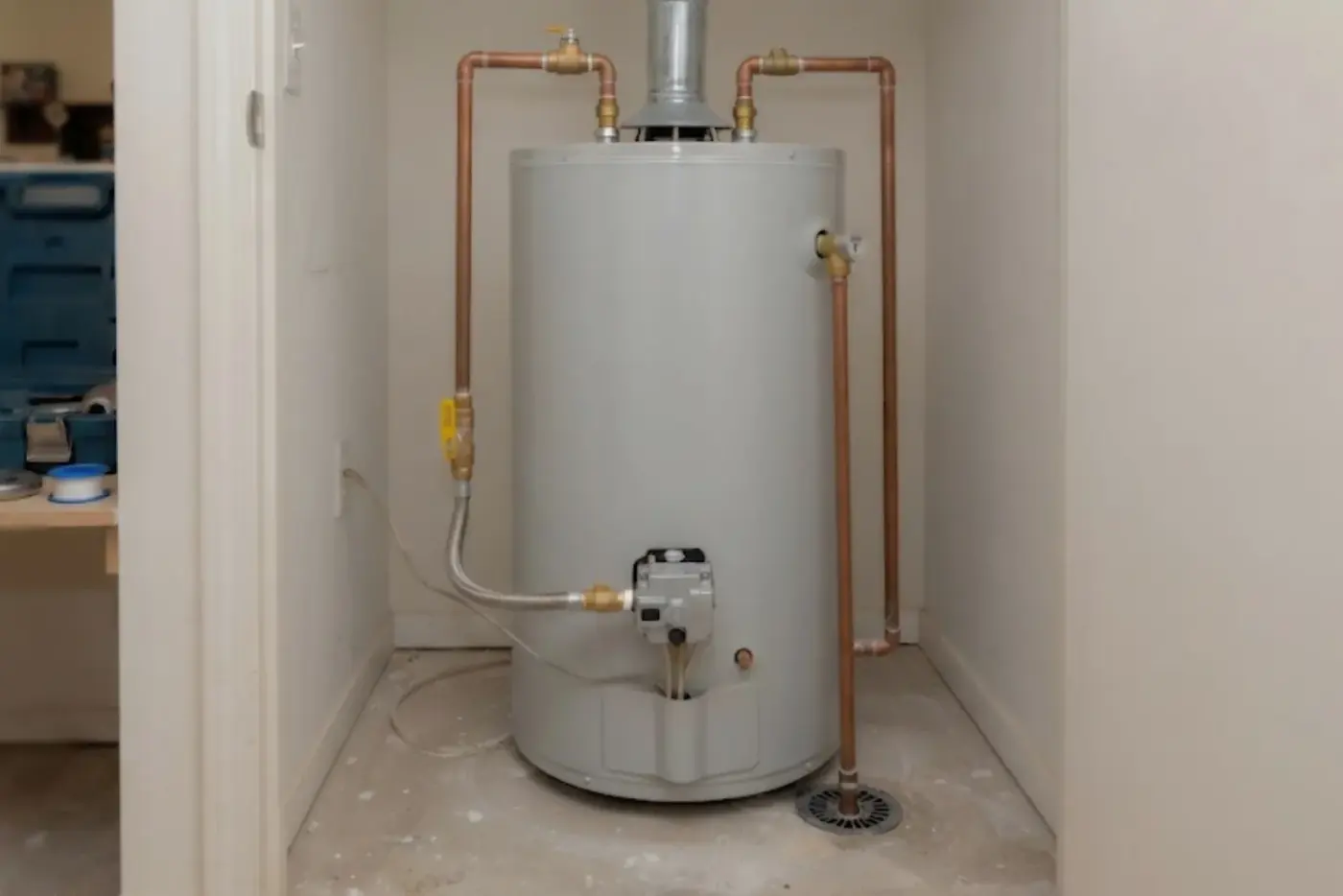
A tank swap looks simple from the outside, yet most early failures trace back to the connections. Corroded dielectric fittings, a missing drip pan, or an undersized vent cause problems long before the tank wears out.
We treat the job as a short checklist that never gets skipped. The checklist below is what you should expect from any plumber who installs a water heater in your home.
Installation checklist
- Capacity matched to your household's peak hot water use.
- New shutoff valve, flexible connectors and a properly piped relief valve.
- Expansion tank where your system needs one.
- Drain pan and a drain line where the unit sits above finished space.
- Gas line sized and tested, or electrical circuit confirmed.
- Venting checked or replaced for the new unit's exhaust.
- Flame, pressure and temperature tested before we leave.
Pick the type before you pick the brand
| Type | What it needs | Where it fits best |
|---|---|---|
| Gas tank | Gas line and a working flue | Homes with gas service and a utility closet or basement. |
| Electric tank | A dedicated electrical circuit | Homes without gas, or where venting is hard. |
| Heat pump hybrid | Open air space and a drain | Households aiming for lower running cost. |
| Tankless gas | Larger gas line, vent and condensate drain | Homes that want to free floor space. |
Tankless installs have more moving parts than a tank swap, so they get their own page. Read our tankless water heater guide before you choose, and ask whether your gas meter and line can support one.
Installing in a low-lying coastal town
Pleasantville's flood information places parts of the city in tidal flood zones, with the city's elevation near seven feet. A water heater sitting on a basement or ground-level floor in one of those areas is exposed to floodwater, which can ruin the burner or the control board.
When the heater sits low, we can raise it on a stand within the code limits for its fuel type. The city's construction office can tell you whether your property sits inside a flood hazard area, and that answer shapes where the unit should go.
Permits and who can install
New Jersey's State Board of Examiners of Master Plumbers states that plumbing shall only be performed by a master plumber, an authorized plumbing contractor, or their W-2 employees. Permit rules vary by job, so ask the Pleasantville construction office whether your installation needs one. If the old tank has already failed, see water heater replacement for the same-day path.
Ready to schedule your install? Call and pick a day that works for your household.
Call (609) 547-1417What affects the price of installation
- Tank or tankless, and the capacity of the unit.
- Fuel type and whether a new gas line or circuit is required.
- Venting changes, which are the largest swing on gas jobs.
- Code items such as expansion tanks, pans and relief piping.
- Access, including stairs, tight closets and haul-away.
Installation of a new heater is normally paid out of pocket and is not an insurance claim. Ask your utility whether any rebate applies to the model you choose.
You get a clear price before work starts. For your real number, call {p}.
Standards and sources
- Plumbing work in New Jersey is governed by the Uniform Construction Code plumbing subcode (N.J.A.C. 5:23-3.15), which adopts the National Standard Plumbing Code. Your local construction official issues permits and inspects the work.
- Plumbers are licensed by the New Jersey State Board of Examiners of Master Plumbers. You can check a license with the board before work starts.
- Gas appliances must follow the manufacturer's installation instructions and local code for venting, clearances and combustion air. Burner and gas work belongs with a licensed contractor.