What we install
Common installations
- Sinks, faucets and toilets.
- Tubs, showers and valves.
- Dishwasher and washing machine hookups.
- Water filters and pressure regulators.
- Hose bibs and outdoor spigots.
- Shutoff valves and supply lines.
- Added bathrooms and kitchen lines.
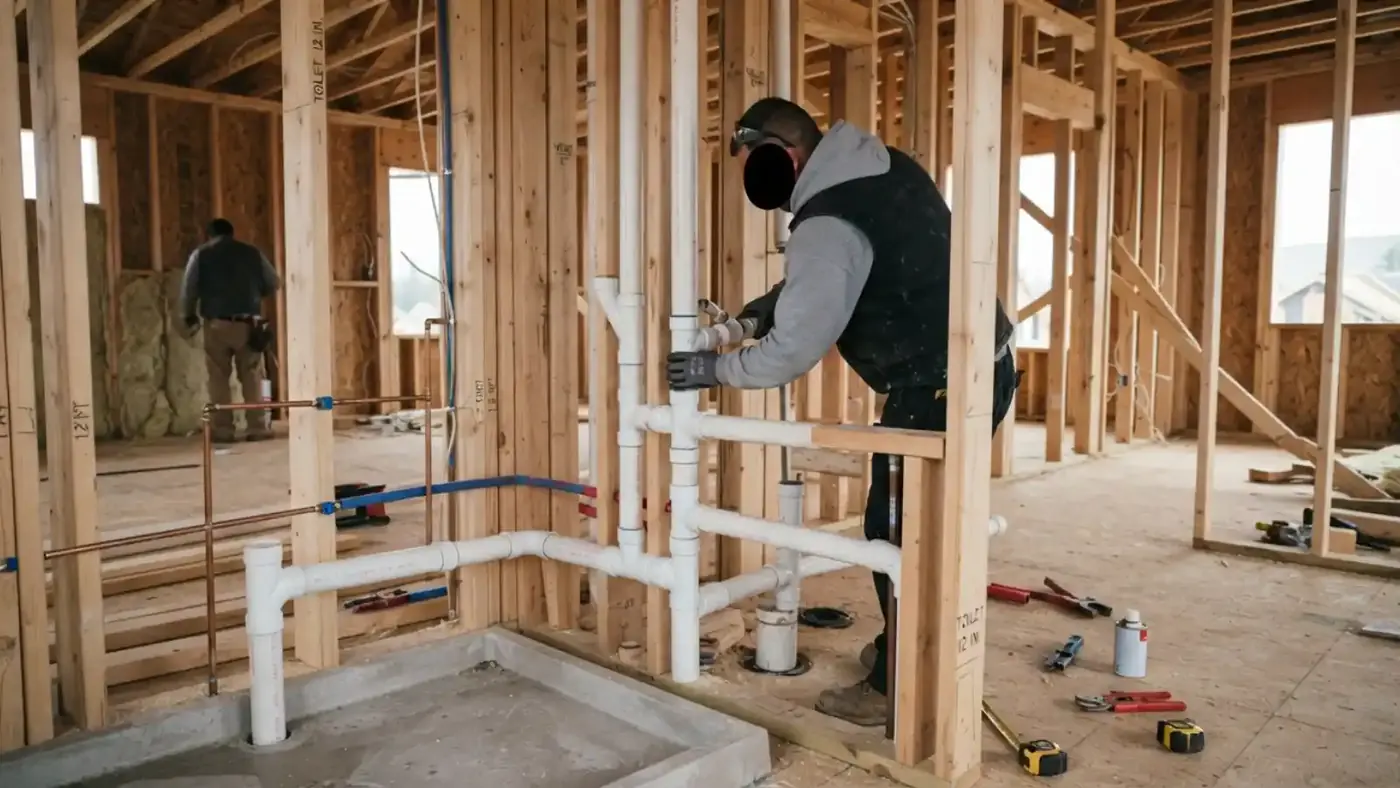
Good installation starts with the rough-in. We check the supply, the drain slope and the vent before we set anything, because a fixture that fits badly never drains well.
If you bought the fixture yourself, send us the model. We check that it fits your rough-in distance and supply before the visit.
Before you buy a fixture
| Item | What to confirm | Why it matters |
|---|---|---|
| Toilet | Rough-in distance from the wall | A wrong size will not fit. |
| Sink | Hole count and faucet type | The faucet and sink must match. |
| Water heater | Fuel, size and venting | The old location may not suit a new type. |
| Appliance hookup | Valve and drain access | Behind-the-wall access saves later leaks. |
Water heaters and larger fixtures
Large installs have their own pages. See water heater installation for tank and tankless units, and toilet repair for new toilets. This page covers everything else, from a new kitchen sink to a washer hookup.
Permits and code
New Jersey licenses master plumbers through the State Board of Examiners of Master Plumbers, and many installations need a municipal permit and inspection. We tell you at the start whether your job needs one.
Permit rules vary by town and by the scope of work, so we confirm with your local building department before we start.
Installing without a plan
A fixture connected to the wrong pipe size, or a drain without a vent, may work for a week and then fail. We check the whole run when we install, not just the fixture.
How a typical installation visit goes
We confirm the fixture, check the rough-in and shut off the water at the right valve. Then we set the new fixture, connect supply and drain, and turn the water back on slowly to check every joint.
We test the fixture under normal use and leave the space clean. If we find a problem behind the wall, we stop, explain it and give you the price to fix it before going further.
Fixtures homeowners ask us to install
| Fixture | What we check first | Related page |
|---|---|---|
| Kitchen sink and faucet | Hole count, drain layout and shutoff valves | Faucet repair. |
| Toilet | Rough-in distance and flange condition | Toilet repair. |
| Dishwasher or washer hookup | Supply valve, drain height and access | Disposal and drain work. |
| Water heater | Fuel, venting and expansion tank | Water heater installation. |
Bring the model numbers when you call. We confirm that the fixture fits your space before you commit to buying it.
Fixture failed or ready to upgrade? Call the 24/7 line.
Call (609) 547-1417What affects the price of plumbing installation
- The fixture and its mounting needs.
- Whether new supply or drain lines are required.
- Wall or floor access.
- Permit and inspection costs.
- After-hours dispatch for a failed fixture.
Insurance rarely pays for upgrades, though it may cover water damage from a failed fixture. Photograph the damage before cleanup.
You get a clear price before work starts. For your real number, call {p}.
Standards and sources
- Plumbing work in New Jersey is governed by the Uniform Construction Code plumbing subcode (N.J.A.C. 5:23-3.15), which adopts the National Standard Plumbing Code. Your local construction official issues permits and inspects the work.
- Plumbers are licensed by the New Jersey State Board of Examiners of Master Plumbers. You can check a license with the board before work starts.