Signs it is time to repipe
When repairs stop making sense
- Leaks in several places within a few years.
- Brown or orange water when you open a tap.
- Low pressure that spot repairs did not fix.
- Pinhole leaks in copper.
- Visible corrosion or flaking on exposed pipe.
- A plumber finding galvanized pipe closing from the inside.
One leak is a repair. Three leaks in two years is a pattern. Each repair opens a wall, and the pipe next to the repair is as old as the one that failed.
We show you the failed section when we have it. A corroded interior is clear evidence, and we do not push repiping when a repair will hold.
Copper or PEX
| Material | Strengths | Trade-offs |
|---|---|---|
| Copper | Long track record, tolerates heat | Higher material cost, slower install. |
| PEX | Flexible, fewer joints, faster install | Not for outdoor sun exposure, needs proper support. |
| CPVC | Low cost for cold and hot lines | More brittle over time. |
What repiping involves
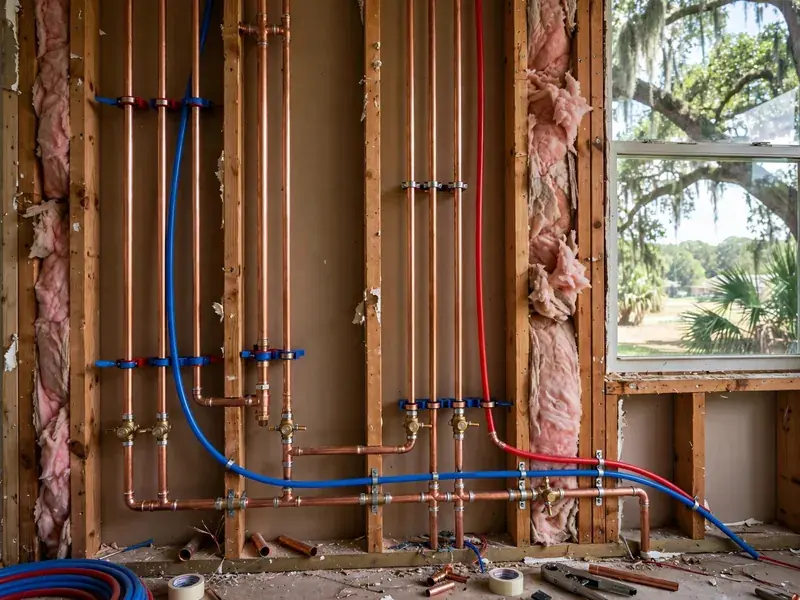
We plan the route, shut off the water for the working day, cut small access openings and run the new lines. Fixtures are reconnected and the system is pressure tested before the walls are closed.
Plumbers do not do drywall and paint. We tell you which openings we make so a finish contractor can patch them.
Older homes in established neighborhoods
Homes built before the 1960s often have galvanized steel or older copper with lead solder. If your home is in an established area, ask us to look at the pipe where it is exposed. A visual check at the basement or crawl space often tells us the material and the condition, and it helps you decide whether to repipe now or watch it.
Water quality context
New Jersey American Water's 2022 Atlantic system report lists lead at 1 ppb and copper at 0.286 ppm at the 90th percentile, both under action levels. Those figures describe the utility's system, not your pipes. If you are concerned about your plumbing, ask for an inspection, and a service line check covers the pipe outside.
Planning a repipe around your life
A repipe disrupts the house for a few days, so we plan it room by room. Water is shut off for part of each working day, and we tell you the hours ahead of time.
If you can, move valuables out of the walls we will open and clear the access points. A clear path shortens the job and lowers the cost.
What happens after the new pipe is in
We pressure test every run before any wall is closed. Then we reconnect fixtures, flush the lines and check pressure at each tap.
You get a plain explanation of what was replaced and what was left. Finish contractors patch the openings, and we tell them where each one is.
Homes and rentals in the Midtown area are covered on our Midtown Pleasantville page.
Leaking again? Call the 24/7 line and we handle the emergency first.
Call (609) 547-1417What affects the price of repiping
- House size and the number of fixtures.
- Pipe material you choose.
- Access through walls, ceilings and crawl spaces.
- Permit and inspection requirements.
- Whether the work is staged over several days.
Insurance rarely pays to replace worn pipes, though it may cover damage from a sudden leak. Ask your agent before work starts.
You get a clear price before work starts. For your real number, call {p}.
Standards and sources
- Plumbing work in New Jersey is governed by the Uniform Construction Code plumbing subcode (N.J.A.C. 5:23-3.15), which adopts the National Standard Plumbing Code. Your local construction official issues permits and inspects the work.
- Plumbers are licensed by the New Jersey State Board of Examiners of Master Plumbers. You can check a license with the board before work starts.
- New Jersey One Call (811) marks buried utilities and should be called before any digging.