What the camera shows
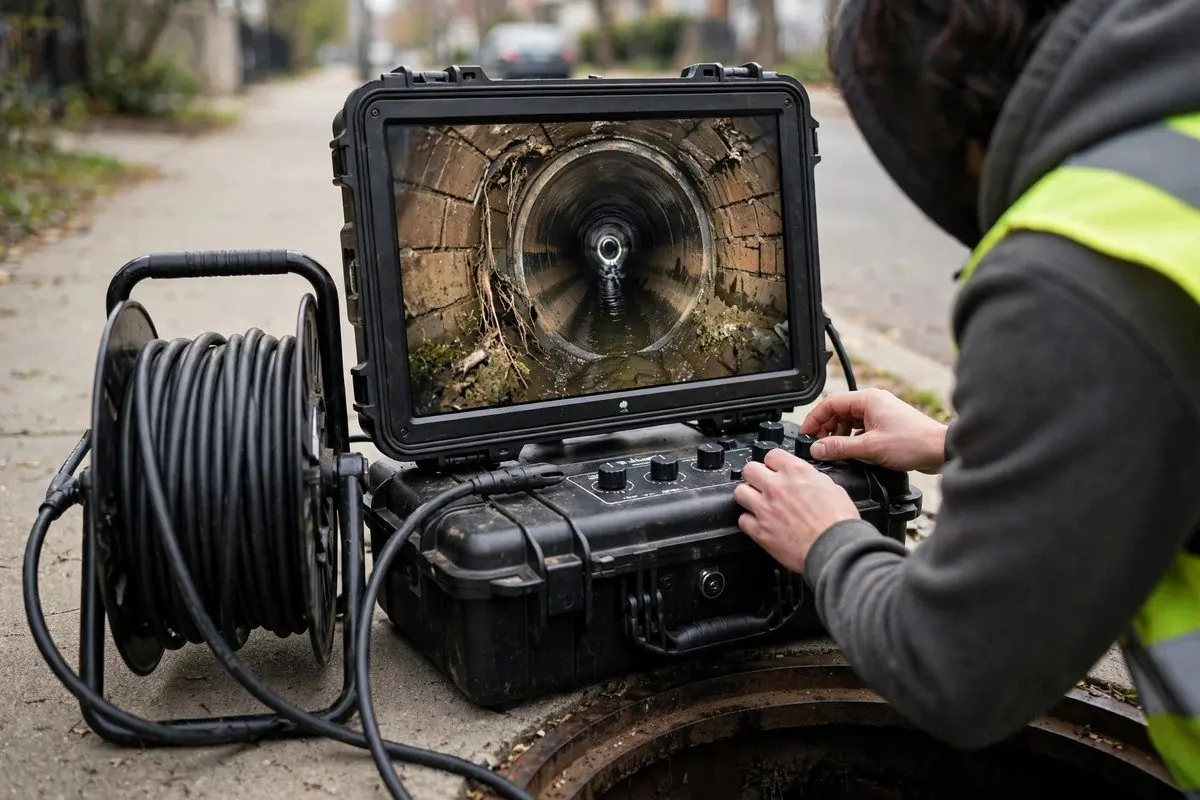
The camera travels the line and records the pipe's material, joints, cracks, roots and low spots. It also finds grease buildup, scale and foreign objects that caused earlier clogs.
A locator in the camera head sends a signal we trace above ground. That tells us the depth and exact route of a problem so any digging stays small.
Common findings
- Tree roots at joints or through cracks.
- A belly where the pipe sags and holds waste.
- Cracked, offset or separated joints.
- Collapsed or crushed sections.
- Heavy grease or scale on the pipe wall.
- A cleanout that is missing or buried.
When an inspection makes sense
| Situation | Why a camera helps | What you get |
|---|---|---|
| Repeat clogs | Finds the cause behind the blockage | Footage and a recommended fix. |
| Buying an older home | Shows the line's condition before closing | A record of cracks, roots and bellies. |
| After a flood or heavy storm | Checks for damage from shifting or inflow | Footage to compare with earlier conditions. |
| Before a lining or repair | Confirms scope and measures the section | A repair plan with accurate length. |
A purchase inspection matters on older streets. Pleasantville became a city in 1914, and any home in an established area such as Mount Pleasant or Risleyville may have a line that has had decades to settle. We do not guess at pipe material from the neighborhood, because only the camera knows what is under a specific lot.
After a flood or storm
Pleasantville's own flood information points to tidal flooding from Lakes Bay and creek flooding in the north of the city. Saturated soil can shift pipes, and floodwater can push silt and debris into a line through cracked joints.
If your street flooded and a drain slowed after that, schedule a camera visit before problems compound. Our sewer line repair page explains the next step if damage turns up.
What we will and will not tell you
We report what the camera shows. We will not recommend a repair that the footage does not support, and we will say plainly if the line looks sound. You keep the video as your record.
What you receive after the inspection
You see the footage while we are there, and we explain each defect in plain terms. We tell you where it sits along the line and how serious it is.
We then lay out the options in order of cost and disruption, from cleaning to lining to digging. You decide what to do, and a clear price comes before any repair starts.
Want to know what is inside your line? Call to book a camera visit.
Call (609) 547-1417What affects the price of a sewer inspection
- Length of the line to inspect.
- Access through a cleanout or a pulled toilet.
- Cleaning needed before the camera can pass.
- Locating and marking the line above ground.
- Report or video copy for a buyer or insurer.
Insurance generally does not pay for an inspection that is not tied to a claim, and a pre-purchase camera visit is usually a buyer's cost.
You get a clear price before work starts. For your real number, call {p}.
Standards and sources
- Plumbing work in New Jersey is governed by the Uniform Construction Code plumbing subcode (N.J.A.C. 5:23-3.15), which adopts the National Standard Plumbing Code. Your local construction official issues permits and inspects the work.
- Plumbers are licensed by the New Jersey State Board of Examiners of Master Plumbers. You can check a license with the board before work starts.