What a slab leak is
Some homes sit on a concrete slab with water or drain pipes running through or below it. If one of those pipes fails, water collects under the floor and works its way up.
Not every house has a slab. If yours has a basement or a crawl space, the same symptoms point to a different location, and our leak detection service finds it.
Signs of a slab leak
What to watch for
- A warm or hot spot on the floor, often from a hot water line.
- Sound of running water with all fixtures off.
- A water bill that rises without a change in use.
- Low water pressure.
- Damp carpet, buckling flooring or cracks in tile.
- A musty smell or mold along baseboards.
A single sign is not proof. Several together point toward a leak, and the meter test confirms it.
A warm spot on the floor is the clearest sign of a hot line leaking, because the water heats the concrete above it.
The meter test
Turn everything off
Close taps and stop appliances that use water.
Check the dial
Look at the leak indicator on the meter.
Wait
Leave the water off for an hour and read the meter again.
Close the main
If the meter still moves with the house main closed, the leak is outside the house. If it stops, it is inside.
Call
Report the readings to us.
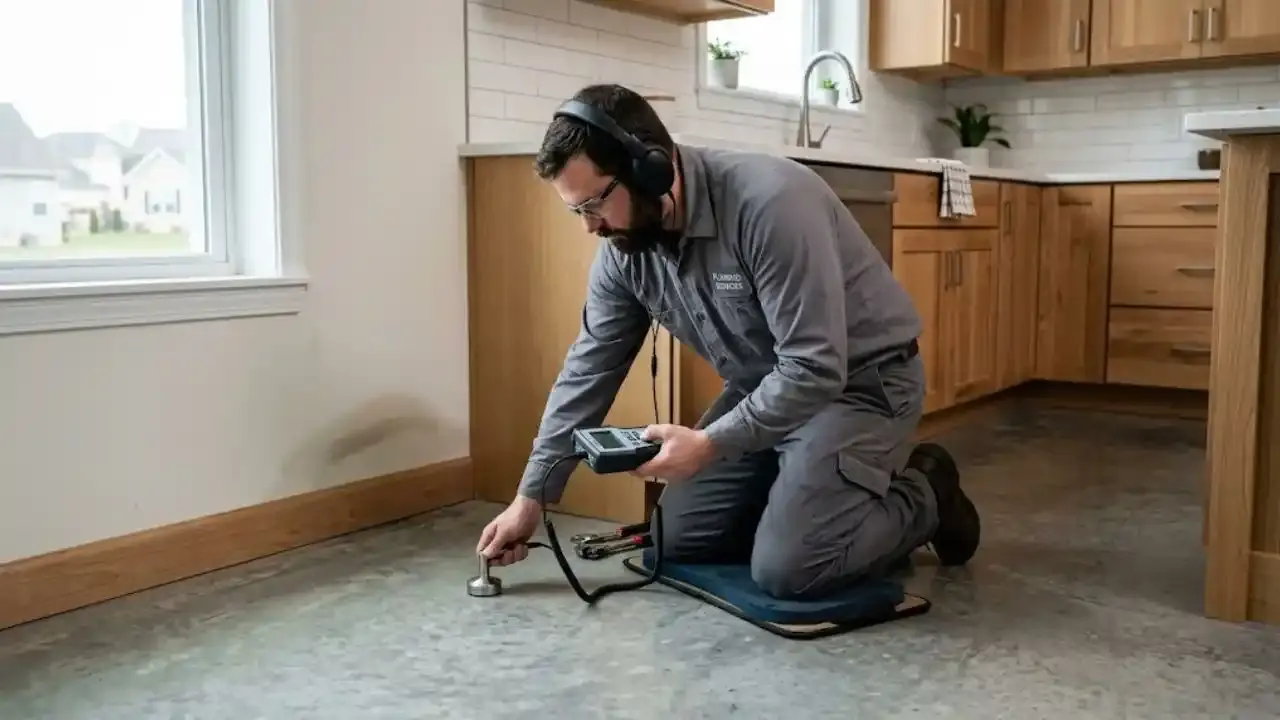
How plumbers locate a slab leak
| Method | What it does | Notes |
|---|---|---|
| Listening equipment | Hears the sound of escaping water | Best for pressurized lines. |
| Thermal imaging | Shows warm areas from hot line leaks | Useful for hot water lines. |
| Pressure testing | Isolates which line is leaking | Narrows the search. |
| Camera inspection | Looks inside drain lines | For drain leaks, not supply. |
We combine methods so we do not open the floor in the wrong place. A precise location keeps the repair small.
After locating it, we explain the options: a spot repair, rerouting the pipe through the attic or walls, or replacing the line. See repiping for the larger option.
What to do right away
If you suspect a slab leak, close the main valve if water is visible or the floor is wet. Move belongings and photograph the damage.
If a hot spot is on the floor, avoid walking barefoot on it. Water that heats a slab can burn skin.
Slab homes and flooding in Pleasantville
The housing stock in Pleasantville includes 7,856 units, and the city sits at about seven feet above sea level. In an area with a high water table, moisture in a slab can come from the ground instead of a pipe.
That is why we run a meter test before we search the floor. If the meter is still, the moisture is not coming from a supply pipe, and the city's flood information is a better starting point.
Insurance and documentation
Many homeowner policies cover sudden water damage but not the pipe itself, and a slow leak is often treated as maintenance. Ask your agent which applies before a claim.
Photograph the damage and keep your meter readings. They help your adjuster understand the timeline.
Hot line versus cold line leaks
A hot water leak warms the floor above it, so it is easier to spot. A cold water leak is quieter and often shows up as damp flooring or a rising bill.
Check which line is affected by turning off the water heater supply and seeing if the warm spot cools. That helps narrow the search.
Drain leaks under the slab
Not all slab leaks are supply lines. A drain leak under a slab causes a musty smell, slow drains or sinking areas, and a camera inspection can locate it.
Both types need a plumber. Water under a slab can undermine the soil and crack the floor if it continues.
Repair choices
We can break through the slab and repair the pipe, reroute the line overhead or replace it. The best choice depends on the pipe condition and how many leaks you have.
If one section has failed, the rest may be close behind. We explain whether a spot repair makes sense or whether a bigger fix is smarter.
Preventing slab leaks
Water pressure that is too high stresses pipes. A pressure regulator and a gauge check help, and a pressure above about 80 psi is worth lowering.
Corrosive water and shifting soil also contribute. A periodic inspection of exposed pipes and a quick meter test now and then catch trouble early.
What to tell the plumber
Give the date you noticed the first sign, any meter readings and whether the warm spot moves. The more detail we have, the faster we locate the leak.
Also tell us the age of the house and the pipe material if you know it. Copper, PEX and galvanized pipe fail in different ways.
What happens if you wait
Water under a slab can erode the soil that supports it and cause the floor to settle or crack. It can also feed mold and ruin flooring long before you see a puddle.
A leak that you fix early costs a fraction of a leak that has run for months. If two or more signs match, start the meter test the same day.
Do not ignore a small clue
Many slab leaks start small. A bill that rises a little each month or a damp corner that returns after drying is enough reason to run the meter test.
Waiting for a bigger sign gives the water more time to travel under the floor. A short test today is cheap compared with replacing flooring later.
Warm floor or meter moving? Call the 24/7 line.
Call (609) 547-1417Standards and sources
- Plumbing work in New Jersey is governed by the Uniform Construction Code plumbing subcode (N.J.A.C. 5:23-3.15), which adopts the National Standard Plumbing Code. Your local construction official issues permits and inspects the work.
- Plumbers are licensed by the New Jersey State Board of Examiners of Master Plumbers. You can check a license with the board before work starts.
- New Jersey One Call (811) marks buried utilities and should be called before any digging.