
Common signs of a yard leak
What to look for
- A soft or sunken area that stays wet in dry weather.
- A patch of grass that is greener or growing faster.
- Low water pressure in the house.
- A water bill that rises with no change in use.
- The sound of running water when everything is off.
- Pooling near the street, the meter or the house foundation.
Not every wet patch is a leak. Rain, a clogged gutter downspout and a sprinkler line can do the same, so rule those out before you dig.
A leak keeps flowing in dry weather and when sprinklers are off, which is the key difference.
The meter test
Turn everything off
Close every tap, stop the washer and dishwasher and turn off the sprinklers.
Find the meter
Open the meter lid and look at the leak indicator, often a small triangle or dial.
Watch the dial
If it moves with all water off, water is flowing somewhere.
Close the house main
Shut the valve where the line enters the house and watch again.
Read the result
If the meter still moves, the leak is outside the house. If it stops, it is inside.
Write down the meter reading, wait two hours without using water and read it again. A changed number confirms a leak.
Take a photo of both readings. That helps us and the utility when we discuss where the line ends.
Where yard leaks happen
| Place | Cause | Clue |
|---|---|---|
| Service line from meter to house | Corrosion or ground movement | Low pressure and a wet strip along the line. |
| Irrigation system | Broken head or valve | Wet area near a sprinkler zone. |
| Outdoor spigot | Cracked pipe or failed valve | Dripping or a soft area at the wall. |
| Sewer lateral | Cracked pipe | Smell and a sunken patch, with sewer backups. |
Water or sewer?
A clean-water leak has no smell and the water comes from a pressurized line. A sewer leak has a smell and shows up with slow drains or backups.
If you suspect sewer, avoid contact with the water and call us. See sewer line repair for the repair side and leak detection for how we locate a hidden leak.
What you can do before the plumber arrives
Close the main valve if water is pooling near the house. Mark the wet area with a stake or flag and take photos with a time stamp.
Do not dig around the line yourself. Buried gas, electric and water lines run through yards, and a mistake can be dangerous. Call 811 before any digging.
Yard leaks and Pleasantville ground conditions
Pleasantville sits at about seven feet above sea level, and the city's flood information describes tidal and creek flooding in several areas. A high water table can keep the ground wet for days after rain, which makes a small leak harder to spot.
Do the meter test before you assume a wet yard is a leak, and use dry weather as your clue. New Jersey American Water supplies the system, and ownership of the line near the meter or curb stop differs from the house side, so ask the utility where its responsibility ends.
How we find the leak without tearing up the lawn
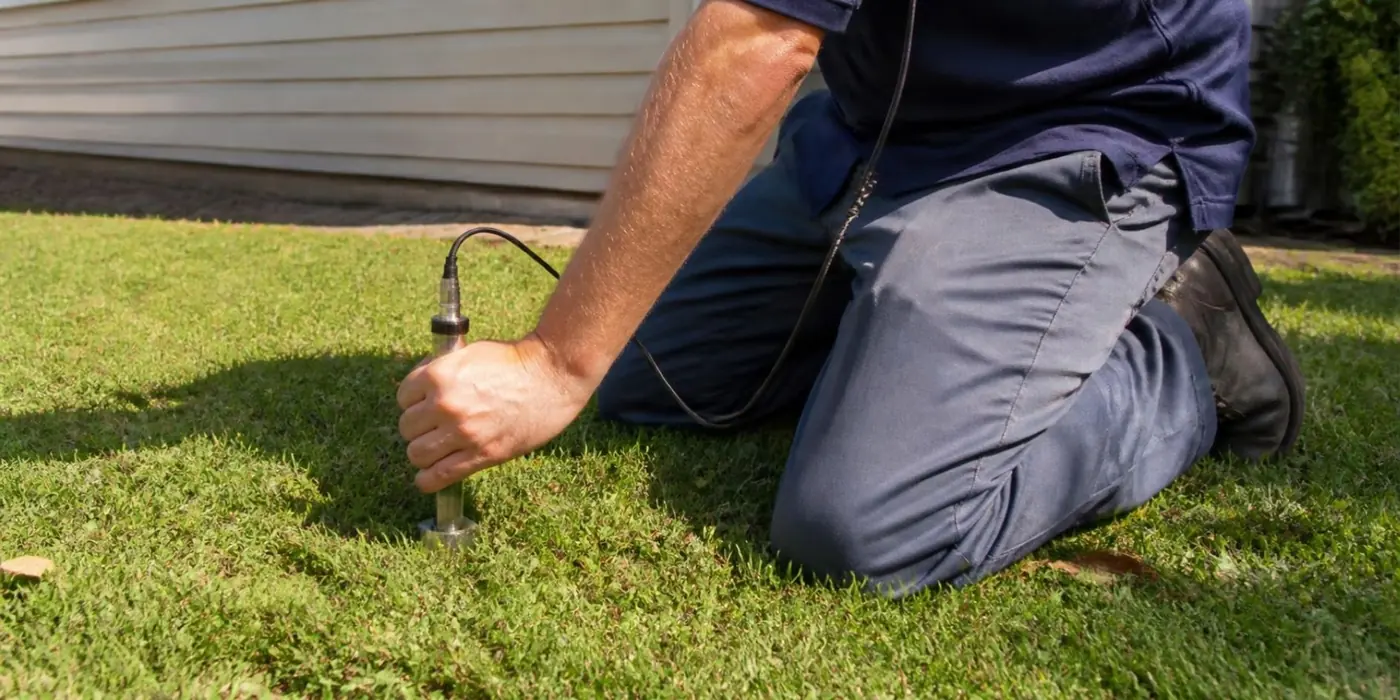
We start with the meter test, then listen along the line with sensitive equipment. When we find the area, we narrow it down and mark it before anyone digs.
The goal is a small opening instead of a trench across the yard. A precise location also shortens the repair and lowers the cost.
Why prompt action pays
A hidden leak wastes water around the clock and can undermine soil, driveways and foundations. The longer it runs, the larger the hole becomes.
A leak you catch from a bill spike is cheaper to fix than one that surfaces as a sinkhole. Follow up on any unexplained increase.
Irrigation systems as a leak source
Sprinkler systems have valves, heads and buried pipe that can fail. A stuck valve leaves a zone running, and a broken head floods a bed.
Turn the system off at the controller and repeat the meter test. If the meter stops, the leak is in the irrigation system, and the sprinkler contractor can find it.
Hose bibs and outdoor spigots
A spigot that drips in winter can freeze and split the pipe behind it. The leak then appears when the weather warms up.
Disconnect hoses in the fall and shut off the interior valve to outdoor spigots if you have one. See faucet repair for spigot repairs.
Typical costs of ignoring a leak
A small leak adds to the bill every month, and a large one can wash out soil under a driveway or walkway. The cost of repairing washed-out ground is often larger than the cost of the leak repair.
That is why we suggest the meter test the moment a bill looks wrong. It takes minutes and costs nothing.
Winter leaks
Cold weather makes leaks harder to see because frozen ground hides the wet spot. A leak can also freeze and form a mound of ice in the yard.
If you see ice in a place where water should not be, close the main valve and call. A frozen leak can still be a burst pipe.
A simple record that helps
Keep a short log with dates, meter readings and photos of the wet area. Note the weather, whether sprinklers ran and any change in pressure.
A written record helps us tell a leak from rain, and it supports a conversation with the utility if the problem sits near the meter.
Neighbors and shared lines
Some streets have shared water or sewer connections. If your neighbor reports similar symptoms, tell the utility and us, because the cause may sit in a line serving both houses.
Do not assume the leak is on your side. Ownership is easier to settle once the leak is located and marked.
Think there's a leak in the yard? Call the 24/7 line and ask for leak detection.
Call (609) 547-1417Standards and sources
- Plumbing work in New Jersey is governed by the Uniform Construction Code plumbing subcode (N.J.A.C. 5:23-3.15), which adopts the National Standard Plumbing Code. Your local construction official issues permits and inspects the work.
- Plumbers are licensed by the New Jersey State Board of Examiners of Master Plumbers. You can check a license with the board before work starts.
- New Jersey One Call (811) marks buried utilities and should be called before any digging.