
First, rule out a plumbing leak
Close every fixture and watch your water meter for fifteen minutes. If the meter moves, you have a plumbing leak and waterproofing will not fix it.
Also check the water heater, the washer hoses and exposed pipes. If these are dry and the meter is still, the water is coming from outside.
What exterior waterproofing involves
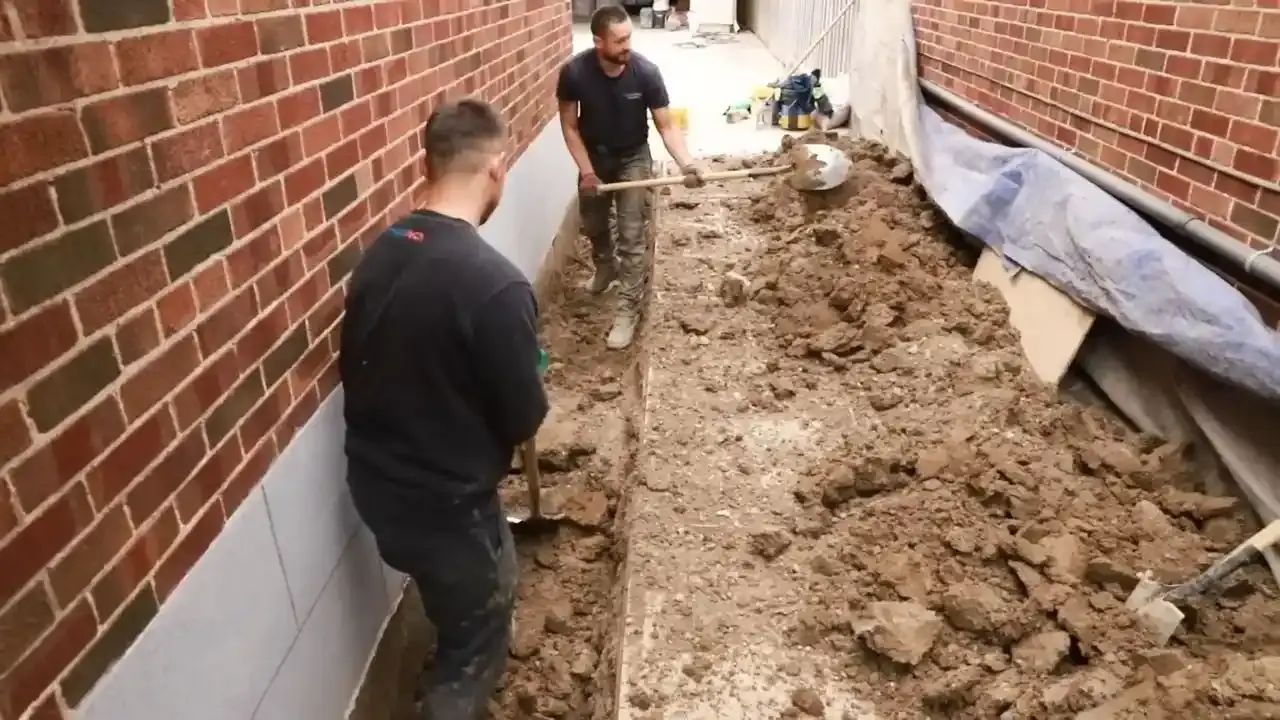
A full exterior job means digging down to the footing, cleaning the wall, applying a membrane, installing drain pipe and gravel and backfilling. It takes heavy equipment and careful work.
Mistakes are expensive. A trench next to a foundation can undermine it, and buried utilities may run near the wall.
| Task | Homeowner-friendly? | Why |
|---|---|---|
| Extend downspouts away from the house | Yes | Simple and effective. |
| Regrade soil to slope away | Often | Needs care and the right fill. |
| Clean and seal small surface cracks | Sometimes | Works for minor seepage only. |
| Dig to the footing and apply a membrane | No | Safety and structural risk. |
| Install footing drain and sump pump | No | Needs plumbing and trench work. |
The steps that help most, and cost little
Do these first
- Clear gutters and extend downspouts several feet from the foundation.
- Regrade the soil so it slopes away from the walls.
- Fix window wells and make sure they drain.
- Seal visible cracks with a product made for masonry.
- Check that outdoor spigots are not dripping against the wall.
Most seepage after rain starts with roof water and soil that slopes toward the house. Fixing those costs little and often solves the problem.
If water still enters after a month of careful changes, the cause is likely a high water table or a failing footing drain.
When the ground is the problem
If groundwater rises against the foundation, no coating will stop it. The water has to be collected and pumped away through an interior drain and a sump pump or an exterior drain.
We handle the plumbing side, including the pump and the discharge. For foundation cracks that grow or walls that bow, call a structural specialist first.
Why Pleasantville basements see groundwater
The City of Pleasantville's flood information describes tidal waters bordering the east and north, creek flooding in the north, and tidal flooding from Lakes Bay east of South Main Street. The city also notes that homes away from the water may still be at risk.
Its page says homeowner's policies do not cover flood damage and that flood insurance has a waiting period, so do not wait for a storm to buy it. Ask the construction official whether your lot is in a flood zone before you dig or build.
Permits and safety
Excavating near a foundation may need a permit. Call 811 before digging so buried utilities are marked, and shore any trench deeper than a few feet.
If you do not have the equipment or experience, hire a contractor. A trench collapse can be fatal.
Interior drainage as an alternative
For many houses, an interior drain at the footing with a sump pump controls water without exterior digging. It collects water that reaches the footing and sends it out.
It does not stop water from reaching the wall, but it keeps the floor dry. See basement waterproofing for how we approach it.
Gutters and downspouts: the cheap fix
Roof water is the most common cause of wet basements. A clogged gutter spills water beside the foundation, and a downspout that ends at the wall sends it straight down.
Clean gutters twice a year and extend downspouts several feet away. If water pools near the wall, add a splash block or a buried drain that discharges downhill.
Window wells and entry points
Window wells collect rain, and a well without a drain fills like a bucket. Check that the bottom has gravel or a drain and that the cover keeps debris out.
Outside stairwells and bulkhead doors need the same attention. A drain at the bottom is important, and a clogged one needs clearing.
When to stop and call
Call a professional if cracks grow, walls bow, water enters at the footing or the floor is wet after every rain. Those signs point to a drainage or structural problem beyond a DIY fix.
A plumber helps with pumps, drains and discharge. A structural problem needs a specialist, and we say so when we see it.
What a professional assessment covers
A plumber looks at the pump, drains and discharge. A structural specialist looks at cracks, wall movement and the footing. Each sees a different part of the problem.
For a wet basement, start with the plumbing check, then add a structural opinion if the signs point that way. This order avoids paying for work that will not help.
Mold and damp air
A damp basement can grow mold on stored boxes and wall surfaces. Run a dehumidifier, lift items off the floor and clean surfaces promptly.
If mold covers a large area, treat it as a separate cleanup problem. We deal with the water source, and a restoration company handles large mold jobs.
A month-by-month plan for a damp basement
In the first week, clear gutters, extend downspouts and move stored items off the floor. In the second week, check grading and window wells and run the meter test again.
After a month, note whether water still appears after rain. If it does, call a plumber to assess drainage and a pump, and a structural specialist if cracks are growing.
Keep records for insurance and resale
Photograph the water, note the dates after storms and keep receipts for any work. These records help an adjuster and a future buyer understand the history.
If you sell, you may need to disclose past water problems. A documented fix with receipts is better than an unexplained stain.
Basement taking on water? Call the 24/7 line and we start by finding the source.
Call (609) 547-1417Standards and sources
- Plumbing work in New Jersey is governed by the Uniform Construction Code plumbing subcode (N.J.A.C. 5:23-3.15), which adopts the National Standard Plumbing Code. Your local construction official issues permits and inspects the work.
- Plumbers are licensed by the New Jersey State Board of Examiners of Master Plumbers. You can check a license with the board before work starts.
- Flood damage is a separate matter from a standard homeowner policy. FEMA's National Flood Insurance Program sells flood coverage, and policies typically carry a waiting period.