What people mean by hybrid
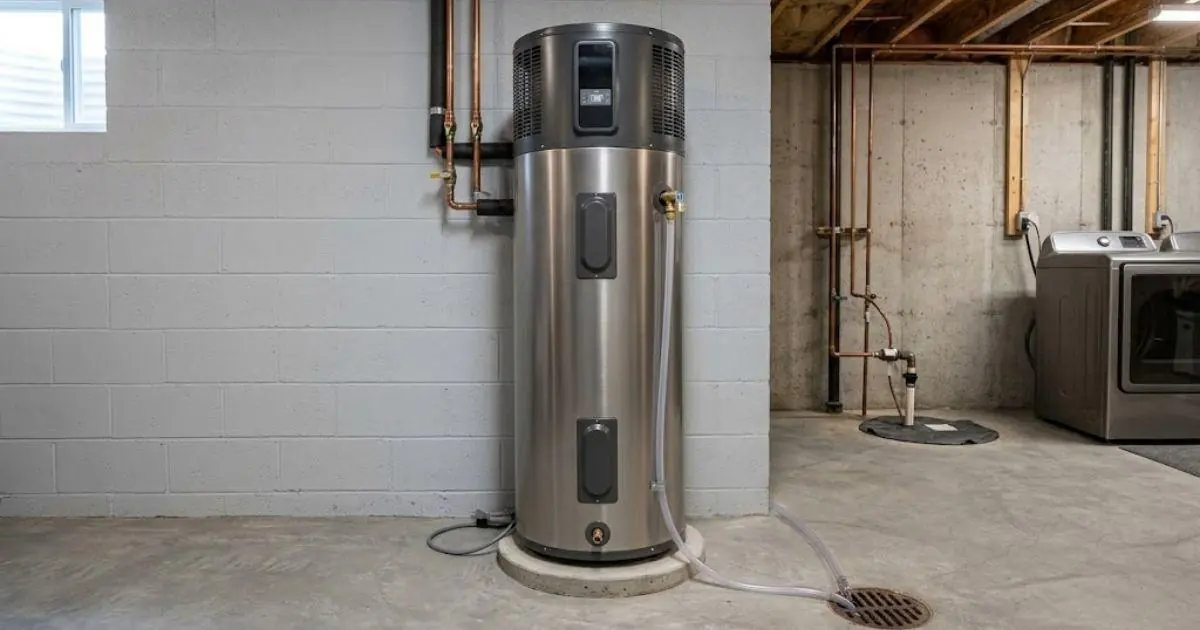
The term is used for heat pump water heaters, which use electricity to move heat from the surrounding air into the tank. It is also used for gas units that pair a storage tank with a high-efficiency burner and a condensing heat exchanger.
Check the model name and the fuel before you compare prices. A heat pump hybrid runs on electricity, and a gas hybrid uses a gas line and a vent.
| Type | Fuel | What to know |
|---|---|---|
| Standard gas tank | Natural gas or propane | Lowest upfront cost, atmospheric vent. |
| Condensing gas tank | Natural gas or propane | Higher efficiency, plastic vent, condensate drain. |
| Heat pump hybrid | Electricity | Needs space and air flow, may cool the room. |
| Tankless gas | Natural gas or propane | See tankless water heater. |
What a gas hybrid needs in the house
A condensing gas unit needs a gas line of the right size, a vent path to the outside, a drain for the acidic condensate and a power outlet for the fan. Some homes have those and others do not.
A closet in a tight hallway may not offer the clearance the manufacturer requires, and a house with an old chimney vent may need a new vent route. A site visit settles it before you buy.
Questions to ask before you choose
- Is natural gas available, or is the house on propane?
- Where will the vent run, and how long is the path?
- Is there a floor drain or condensate pump option?
- How much space does the unit need around it?
- Is the efficiency gain worth the higher price for your usage?
Is it worth the higher price
Higher efficiency saves fuel each month, but the savings depend on your hot water use. A household of two uses much less than a household of five, so the payback period differs.
If you are replacing a tank that has failed, ask for an honest comparison. We prefer to put in the unit that suits the house, and we explain the trade-offs on the water heater installation page.
When a standard tank is the better choice
If your house has an existing chimney vent, a standard gas tank is simple to swap and the lowest cost. A hybrid adds cost for venting and a drain, and the savings may not outweigh it in a small household.
If the tank has already failed and you have no hot water, a standard tank often gets you back online fastest. See water heater replacement for the process.
Gas and local conditions around Pleasantville
Some homes have natural gas and others use propane or electricity. Confirm your fuel before choosing a unit.
Pleasantville's flood information describes tidal and creek flooding in several areas, and a water heater in a low basement can be damaged by floodwater. If your heater sits low, ask us about raising it on a stand, which also protects the burner and controls.
Installation, permits and warranty
Water heater installs usually require a permit and inspection in New Jersey towns, and a licensed plumber handles the paperwork. Gas and vent work must follow the manufacturer's instructions and local code.
Ask for the warranty terms in writing. Tank warranties and parts warranties differ, and labor is often separate.
Sizing the unit
A tank that is too small runs out of hot water, and a tank that is too large wastes fuel. The label on a tank lists its first-hour rating, which tells you how much hot water it delivers in an hour of use.
Count your peak hour. If three people shower in the morning and the dishwasher runs, you need enough first-hour capacity to cover it.
Maintenance for efficient units
Condensing units need the condensate drain kept clear and the vent inspected each year. A clogged drain trips the unit and leaves you without hot water.
Flush the tank every year or two to remove sediment, and check the anode rod on a tank every few years. A neglected tank loses efficiency and life.
What to expect on installation day
A typical install takes most of a day. We drain and remove the old unit, set the new one, connect gas, water and vent, fill and test it.
You will be without hot water for part of the day, so plan showers around it. We leave the area clean and explain how to set the temperature.
Rebates and incentives
Utilities and the state sometimes offer incentives for high-efficiency water heaters. The programs change, so check current offers before you buy.
Ask your installer whether the model you choose qualifies, and keep the paperwork you need to claim an incentive. We do not promise any rebate, because eligibility depends on the program.
Noise, space and location
Heat pump hybrids make some noise and cool the air around them, so they suit basements and garages better than closets in living areas. Gas units need a clear vent path and clearance.
Think about where the unit will live for the next ten years. A good location makes service easier and reduces the risk of water damage if the tank leaks.
A simple way to decide
List your fuel, your hot water use, your vent path and your budget. If you have a chimney vent and a modest household, a standard tank is hard to beat.
If you have a larger household, can run a plastic vent and want lower fuel use, a condensing unit may repay the extra cost. Ask us for both prices and the trade-offs.
Warranty and service questions
Ask how long the tank and the parts are covered and whether labor is included. Ask who services the unit if something fails after the first year.
Keep the model and serial numbers with your receipt. They speed up any warranty claim.
Planning a water heater upgrade? Call and ask for a site visit.
Call (609) 547-1417Standards and sources
- Plumbing work in New Jersey is governed by the Uniform Construction Code plumbing subcode (N.J.A.C. 5:23-3.15), which adopts the National Standard Plumbing Code. Your local construction official issues permits and inspects the work.
- Plumbers are licensed by the New Jersey State Board of Examiners of Master Plumbers. You can check a license with the board before work starts.
- Gas appliances must follow the manufacturer's installation instructions and local code for venting, clearances and combustion air. Burner and gas work belongs with a licensed contractor.