
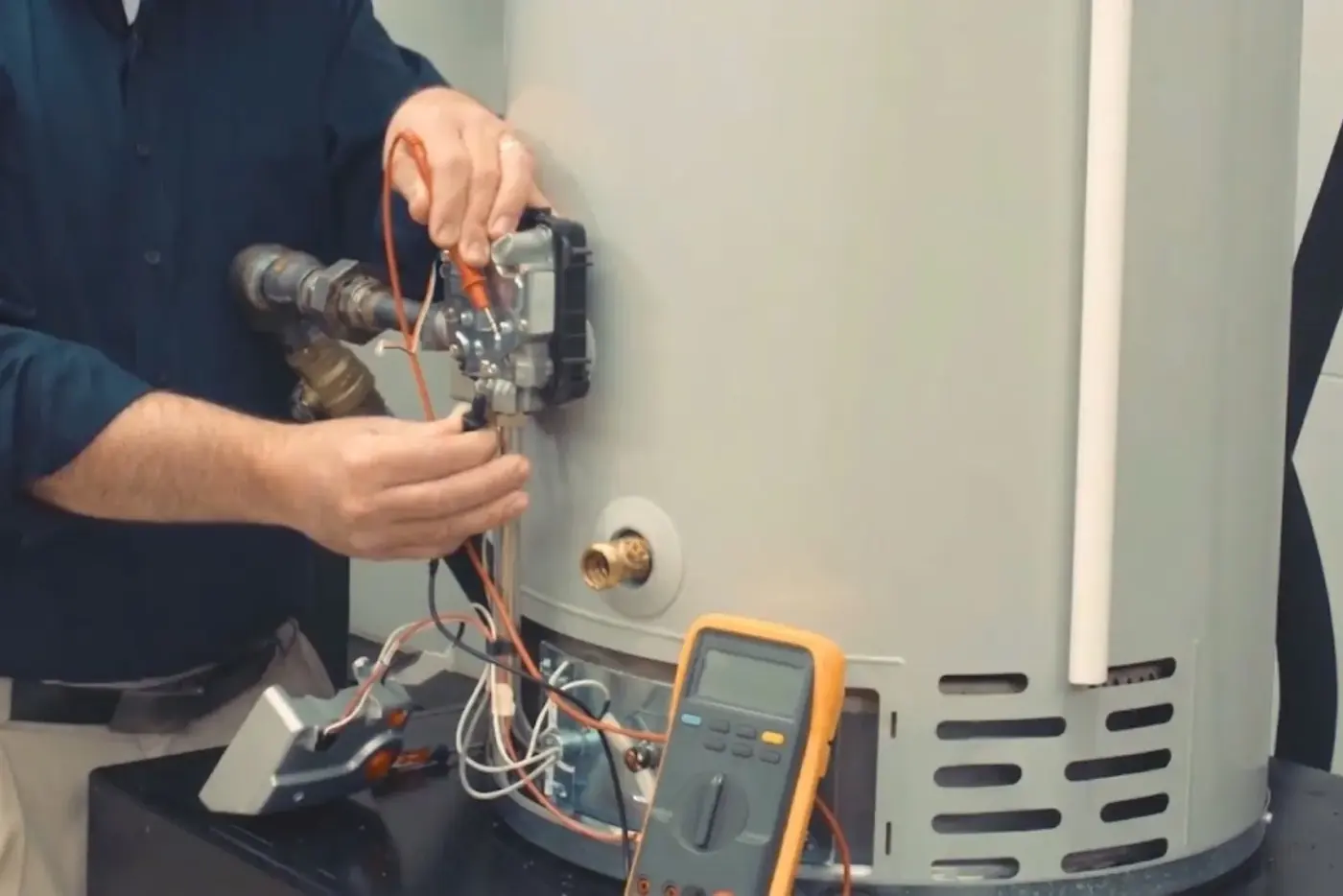
What a thermocouple does
A thermocouple is a small metal probe that sits in the pilot flame of a gas water heater. The flame heats it and it produces a tiny electric current. That current keeps the gas valve open.
If the flame goes out, the current stops and the valve closes. This is a safety feature that prevents gas from flowing when nothing is burning, and it is why a failed thermocouple shuts the heater down.
Signs the thermocouple has failed
Common symptoms
- The pilot light lights but goes out when you release the knob.
- The pilot will not light at all.
- The heater runs for a short time and then loses heat.
- Soot or a weak, yellow pilot flame.
- A heater that is more than ten years old with repeated pilot problems.
A weak flame or a dirty pilot can mimic a bad thermocouple. Cleaning the pilot orifice sometimes solves the problem, and checking the flame color is a good first step.
A steady blue flame that touches the tip of the probe is healthy. A yellow, lazy flame is not, and it can signal a draft problem or dirt rather than a part failure.
Where the do-it-yourself line should be
Replacing a thermocouple is within reach of a careful homeowner on a standard gas tank heater. It involves closing the gas, removing a small nut and fitting a new probe, then relighting the pilot.
Stop and call a plumber if you smell gas, if the heater is in a tight closet or if the heater has a sealed combustion or electronic ignition system. Those units have no thermocouple to replace in the usual way.
Close the gas
Turn the gas control to off and shut the gas supply valve. Wait several minutes for any gas to clear.
Open the access panel
Remove the burner access cover and locate the pilot assembly.
Remove the old probe
Loosen the nut at the gas valve and the bracket at the pilot, then pull the probe out.
Fit the new probe
Install the replacement in the same position and hand tighten, then snug with a wrench.
Relight and test
Follow the label instructions, hold the pilot button, then confirm the flame stays on when you release.
Check for gas first
Never relight a pilot if you smell gas. Open windows, leave the house and call the gas utility and 911. A plumber can replace the part after the utility confirms it is safe.
Is it worth repairing an older heater
| Heater age and condition | Better choice | Why |
|---|---|---|
| Under ten years, no rust | Replace the thermocouple | Cheap part, long remaining life. |
| Ten to fifteen years, pilot trouble repeats | Consider replacement | Other parts are aging too. |
| Rust or water at the base | Replace the heater | A tank leak cannot be repaired. |
| No hot water at all, any age | Diagnose first | Could be the pilot, the valve or the element. |
If you are weighing the cost of repeated repairs, see water heater repair and water heater replacement. We will tell you honestly which makes sense for your unit.
A tankless unit does not use a thermocouple in the same way, and tankless water heater service has its own diagnostics.
Gas, water heaters and Pleasantville homes
Whether your heater runs on gas or electricity, the age of the tank often matters more than the thermocouple. A heater near the end of its life may fail again within months.
New Jersey requires plumbing work to be done by licensed plumbers, and you can verify any plumber through the state's Board of Examiners of Master Plumbers. Ask for the license number before work begins.
What to do while the heater is out
Your pipes will still carry cold water. If a leak or a gas smell is not involved, plan showers around the outage and keep the heater off until it is repaired.
If the cold weather is hard, the heater room may be near an exterior wall. Keep the door open so the room stays warm enough to protect nearby pipes.
Pilot problems that are not the thermocouple
A pilot that goes out in wind or when a door slams may have a draft problem, not a bad probe. A dirty pilot tube or a clogged orifice can produce a weak flame that fails to heat the probe.
A failed gas control valve is another cause. If a new thermocouple does not cure it, the control valve is the next suspect, and that is a job for a licensed plumber.
Safety habits around a gas water heater
Keep the area around the heater clear of boxes, rags and paint cans. Flammable vapors can drift to a pilot flame, and clutter blocks the air the burner needs.
Check the temperature setting once a year. A setting near 120 degrees reduces scalding risk and saves fuel, and it is easy to adjust on the gas control.
Signs it is time for a professional
Call a plumber if the burner flame is large, yellow or uneven, if the flue feels hot at the draft hood or if rust streaks run down the tank. Those signs point to a combustion or tank problem that a new probe will not cure.
A heater that needs attention every few months is telling you it is near the end of its life. Our water heater replacement team can walk you through the options.
No hot water and a pilot that will not stay lit? Call the 24/7 line.
Call (609) 547-1417Standards and sources
- Plumbing work in New Jersey is governed by the Uniform Construction Code plumbing subcode (N.J.A.C. 5:23-3.15), which adopts the National Standard Plumbing Code. Your local construction official issues permits and inspects the work.
- Plumbers are licensed by the New Jersey State Board of Examiners of Master Plumbers. You can check a license with the board before work starts.
- Gas appliances must follow the manufacturer's installation instructions and local code for venting, clearances and combustion air. Burner and gas work belongs with a licensed contractor.