What sewer lining is
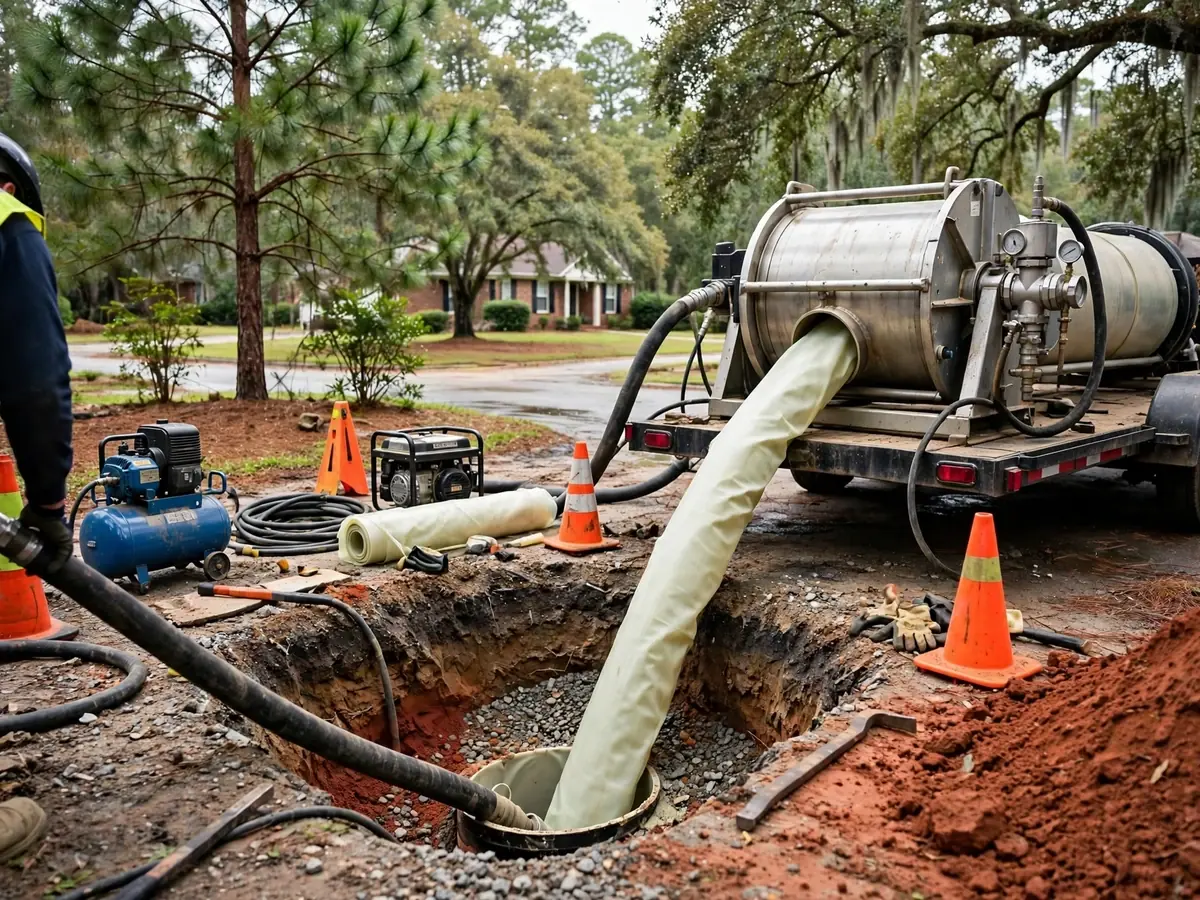
Lining repairs a damaged pipe from the inside. A resin-soaked liner is pulled or inverted into the old pipe, and it hardens into a new pipe within the old one.
The method avoids a long trench, so lawns, driveways and landscaping are mostly left alone. It works best when the old pipe is still in line and has not collapsed.
Why the price per foot varies
Factors behind a lining quote
- Pipe diameter and the number of bends.
- Total length and the access points available.
- Cleaning and root cutting before the liner goes in.
- Camera inspection before and after.
- Whether a section is too damaged to line and needs digging.
- Reinstating side connections after lining.
Because these factors differ at every house, a per-foot figure is misleading. A short, straight run with a good cleanout costs less per foot than a long run with a break.
We do not quote a per-foot number sight unseen. We run a camera, measure the line and give you a clear price before work starts.
| Factor | Lining | Open trench |
|---|---|---|
| Yard disturbance | Small access pits | A long trench. |
| Best when | Pipe is intact but cracked or root-filled | Pipe has collapsed or is badly out of line. |
| Time on site | Often shorter | Often longer. |
| Restoration | Little | Soil, landscaping and sometimes paving. |
| Limits | Not for collapsed or offset pipe | Higher disruption. |
Signs you may need lining or repair
Recurring clogs, slow drains and roots found on a camera are the usual signs. A line that backs up every year is not a maintenance problem. It is a pipe problem.
Start with a camera inspection so the decision rests on what the pipe looks like. Our sewer inspection service documents the line, and sewer line repair explains your options.
Cleaning before lining
A line must be clean before a liner goes in. We cut roots and clear scale with hydro jetting, then run a camera again before lining starts.
Skipping the cleaning step leaves a liner that does not seat properly. The cleaning is part of the work, not an add-on you can skip.
Sewers and flooding in Pleasantville
The city's flood information describes tidal flooding along the eastern and northern edges and creek flooding in the north. High water can push groundwater into cracked sewer pipes and add load to the system.
A lined pipe resists groundwater entering through cracks, which can help in flood-prone areas. Tell us if backups happen during storms, and ask your municipal office who owns the portion of the line near the street.
Questions to ask before you agree
Ask what the camera showed and whether the whole length can be lined. Ask how side connections are reopened, what warranty applies and what happens if a section cannot be lined.
Get the answers in writing. A clear quote lists the length, the method and what is included.
What a camera inspection tells you
A camera reveals cracks, roots, offsets, sags and the pipe material. It also shows how far the damage extends, which decides whether lining is realistic.
We record the inspection so you can see it. Ask any contractor to show you the footage before you agree to a repair.
Lining is not for every pipe
Liners need a pipe that is continuous and not collapsed. A line with a bad offset or a missing section needs digging at that spot. Some houses have a mix, where part is lined and part is replaced.
If a contractor says every sewer line can be lined, ask for the reasons. The camera should support the plan.
Alternatives to lining
Other options include spot repair, pipe bursting and full replacement. Each has trade-offs in cost, disruption and lifespan.
Our sewer line repair page explains the options. We recommend the least disruptive method that will actually last.
Maintenance after lining
A lined pipe still needs sensible use. Keep grease, wipes and other items out of the drain, and have the line cleaned if slowdowns return.
Ask for the warranty and keep it with your house records. It is useful when you sell.
Signs a quote is too low
A price that skips the camera, the cleaning or the reinstatement of side connections is not a complete quote. The cheapest offer may leave out the steps that make lining work.
Ask what is included and what would cost extra. A fair quote lists each step and the materials.
Planning around a repair
Lining needs the sewer out of service for part of a day, so you cannot use toilets, sinks or the washer during the work. Plan to be out of the house or to use another bathroom.
Ask how long the water must stay off and when the line can be used again. A clear plan avoids surprises.
Selling a house with an old sewer line
Buyers often order a sewer camera inspection. A pipe with roots or cracks can slow a sale or lower the price.
A lined pipe with a written warranty can reassure buyers. Ask the installer for documentation you can hand over at closing.
Preparing for the inspection
Clear access to the cleanout and tell us about past backups. Mention any trees near the line, because roots are the most common cause of damage.
A camera visit takes under an hour for most houses, and you see the footage while we are there.
Why we recommend the camera first
A camera turns a guess into facts. It shows whether lining, jetting or digging fits, and it protects you from paying for the wrong repair.
We share what we see and explain it in plain terms, so the decision stays yours.
Recurring sewer backups? Call the 24/7 line and ask for a camera inspection.
Call (609) 547-1417Standards and sources
- Plumbing work in New Jersey is governed by the Uniform Construction Code plumbing subcode (N.J.A.C. 5:23-3.15), which adopts the National Standard Plumbing Code. Your local construction official issues permits and inspects the work.
- Plumbers are licensed by the New Jersey State Board of Examiners of Master Plumbers. You can check a license with the board before work starts.